
Key point
Do not commission detailed drawings until the design problem and the remaining responsibilities are clear.
They Often Enter At Different Moments
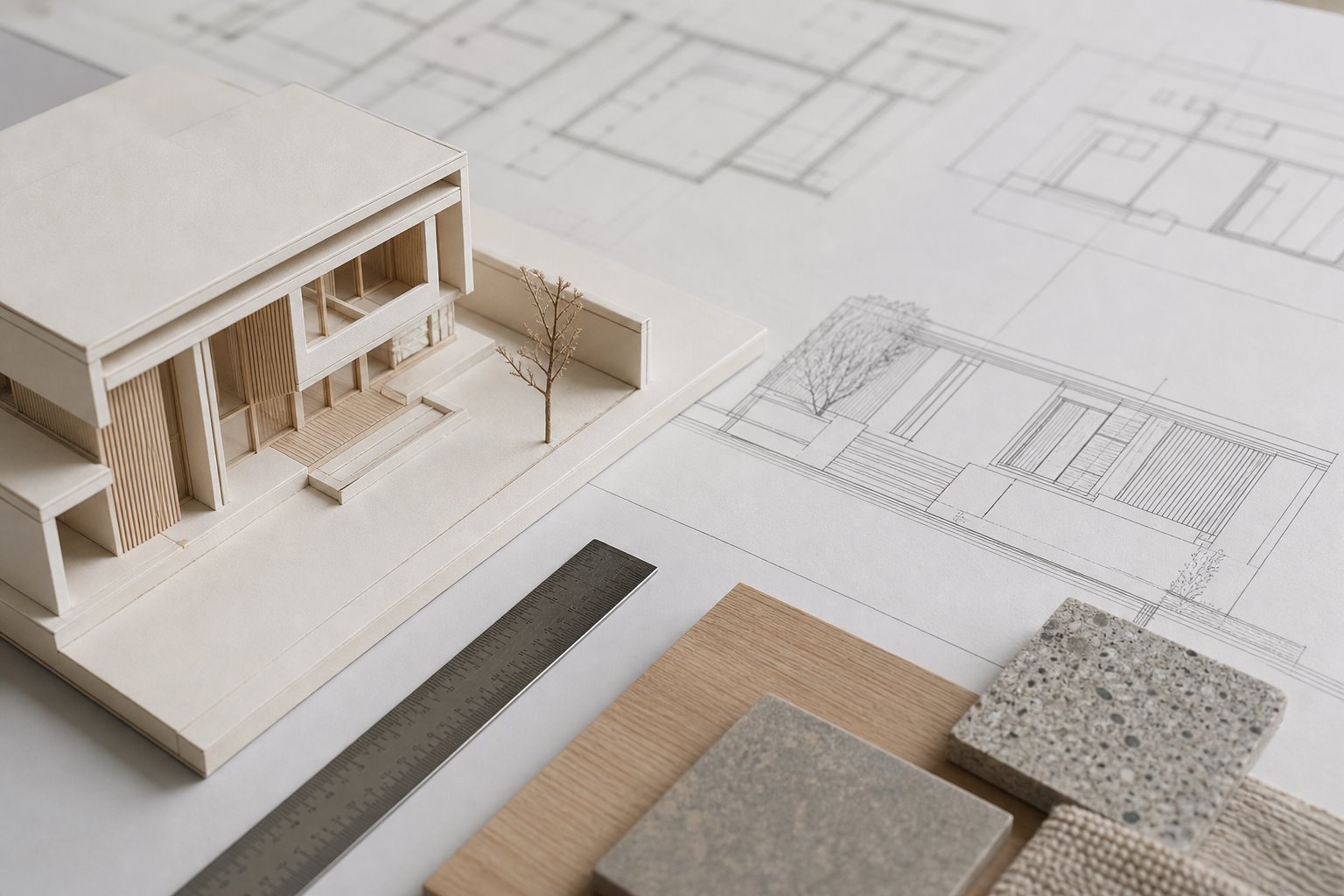
A draftsperson is often engaged when the direction is already reasonably defined and the main task is to turn it into coordinated drawings. An architect commonly begins earlier, helping establish the brief, investigate the site, compare options and explain why a direction should be selected. Actual services vary between individuals, so these are practical tendencies rather than a judgement about every practitioner. The key question is whether your project needs design decisions resolved or a known solution documented.
Define What Is Still Unknown
Before requesting drawings, list the uncertainties that could change the project: extension size, room order, daylight, privacy, planning controls, structure, service upgrades, budget, staging or future family use. If these questions remain open, documenting one answer too soon can create false progress. A clearer first stage is to represent the problem, gather available evidence and decide which alternatives deserve testing. Only then can detailed drawings record a direction that has earned commitment.
Design Work Is More Than Producing A Plan
A plan may fit the requested rooms and still perform poorly. Design work considers how spaces relate, where light enters, how privacy is managed, what the building asks of its structure, and how construction choices affect cost and maintenance. It also recognises that residential projects rarely have one provably optimal answer. The aim is a well-reasoned and satisfactory solution that responds to the brief, site and constraints, with trade-offs made visible to the client.
Documentation Has Its Own Value
Clear drawings, schedules and notes are essential once a design is selected. They support approvals, consultant coordination, builder pricing and construction. A skilled draftsperson may be well suited to this work when the scope and responsibilities are defined. Documentation should not be treated as automatic production, however. New information can expose unresolved design questions, and the agreement should explain who has authority to answer them and how changes will be reviewed.
Use A Hypothetical Test
Imagine a hypothetical owner who already has an approved, consultant-coordinated design and needs detailed updates for a conventional alteration. Focused drafting may be a sensible service. Now imagine the same owner has only a sketch, an uncertain budget and several ways to connect the house to the garden. That project needs design judgement before documentation. The label matters less than whether the person is appointed and qualified to handle the decisions that remain.
Compare Proposals By Responsibility
Ask who develops the brief, checks planning constraints, measures or verifies existing conditions, tests alternatives, coordinates engineers and other consultants, prepares permit information, responds during pricing and helps with construction questions. Confirm exclusions and who accepts responsibility for information supplied by others. A low drawing fee may be appropriate for a narrow task, but it should not be mistaken for a complete design service if those broader responsibilities remain with the client.
Choose The Lightest Adequate Service
The goal is not to use more professional service than the project needs. It is to avoid using less than the uncertainty requires. When the problem is simple and the design settled, focused drafting can be efficient. When the project contains competing goals, significant risk or a weakly defined solution, earlier architectural work can make later documentation more reliable. Decide by the open decisions, the person's demonstrated capability and a clear written scope.
Sources and further reading
Start a conversation
Planning a home project?
Tell us the site, project type and the main decision you need help with.
No prepared brief is required.