

Key point
Seven stars measures the building shell; Whole of Home measures broader energy use, and both still depend on documented assumptions.
Start With What Seven Stars Measures
A 7-star NatHERS rating describes the predicted thermal performance of a home's building shell under standard modelling assumptions. An assessor uses plans, local climate data, orientation, layout and construction details to estimate the heating and cooling needed to keep rooms comfortable. The result sits on a zero-to-ten scale. Seven stars generally means the home should need less mechanical heating and cooling than a lower-rated design; it does not mean the home will use no energy.
Separate Thermal Performance From Whole Of Home
NatHERS presents two related but different measures. The thermal star rating focuses on the shell: roof, walls, floors, insulation, glazing, shading, ventilation and draught effects. Victoria's Whole of Home requirement also considers annual energy use by fixed equipment such as heating, cooling, hot water and lighting, with solar generation able to contribute. A seven-star shell therefore does not, by itself, describe every appliance, actual household bills or whether the home is all-electric.
Understand The Victorian Minimum
Victoria made the updated NCC 2022 energy-efficiency provisions mandatory from 1 May 2024. They raised the minimum thermal standard for new homes from six to seven stars and introduced a Whole of Home energy-use budget. The applicable pathway can depend on building type, permit timing and project circumstances, so owners should confirm requirements with their building surveyor and project team. Seven stars is a regulatory baseline, not a promise that every design decision has been optimised.
Design For The Site And Climate
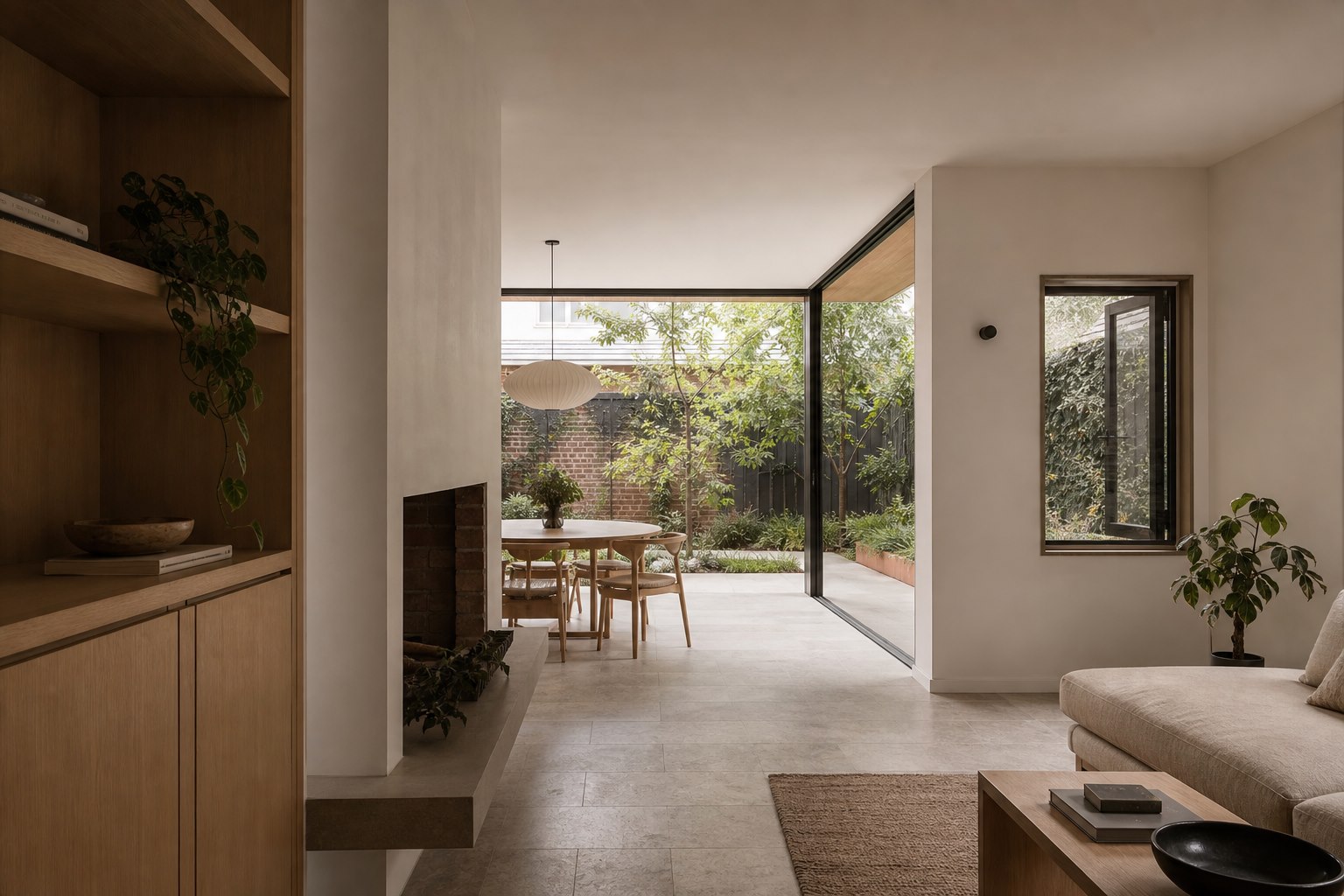
Reaching seven stars is not achieved by one universal specification. NatHERS modelling responds to local climate, site orientation, room arrangement, window placement, materials and construction. A Melbourne design may place frequently used rooms where winter sun is useful, limit unwanted summer heat and support natural ventilation when conditions allow. A constrained or shaded site may need another balance. The task is to test the whole design rather than add isolated “green” products late.
Treat Windows And Shading As One System
Windows can admit daylight, views, winter sun and unwanted heat or cold, so their size, direction, frames, glass and shading must work together. More glass is not automatically better, and high-performance glazing cannot correct every problem created by poor orientation or missing shade. Insulation continuity, roof and floor construction, draught control and thermal bridging also influence the model. Early testing can balance comfort, architecture, construction cost and the character of each room.
Coordinate The Details Before Construction
The rating is based on documented assumptions, so drawings, specifications and construction need to stay aligned. A change to window size, glass type, insulation, colour, shading or construction method may affect the result and should be checked before acceptance. The certificate is useful evidence, but performance also depends on workmanship, commissioning, maintenance, weather and occupant behaviour. Clear documentation and site observation help reduce the gap between the assessed design and finished building.
Use The Rating To Guide Better Decisions
Use the assessment as a design tool, not only a permit checkpoint. Ask which rooms drive heating or cooling demand, which changes produce the strongest improvement and what trade-offs they introduce. A suitable response may combine a refined plan, better shade, carefully selected windows, continuous insulation and efficient systems rather than one upgrade. A seven-star home should begin with an integrated brief and measured testing, while recognising that predicted ratings and future running costs are not guarantees.
Sources and further reading
Start a conversation
Planning a home project?
Tell us the site, project type and the main decision you need help with.
No prepared brief is required.