
Sending washing downstairs can look like a neat answer in a two-storey home. Clean clothes still have to come back. For Raworth renovations, extensions and new homes, benssur would plan the complete washing routine before letting a chute determine the position of bedrooms, cupboards and the laundry.
Amber’s published Raworth project account on ArchiPro, crediting Coastline Builders & Designers, describes upstairs bedrooms and a powder room with a laundry chute. It is a supplier’s account of a built home, not a technical drawing of that installation. Its useful prompt is the relationship between a fixed vertical connection and the rooms at either end, rather than the mechanism itself.
Give collection and receiving their own space
An upper collection point needs to serve the people who use it. Placing it in a shared powder room may be convenient, but collection then depends on that room being available. A position off a landing could be more independent while using space that might otherwise hold linen or improve the bedroom approaches. The appropriate safety and building requirements must be resolved for the actual proposal; neither position is a ready-made installation instruction.
Below, receiving washing is a separate activity from loading a machine. Clothes need somewhere to arrive and wait without blocking an appliance, bench or doorway. Reserving only a narrow vertical shaft can leave the laundry with no useful sorting area. Show the receiving space occupied before judging the room’s width.
The vertical connection may also pass through a room that has nothing to do with washing. A straight route could take a useful corner from a bedroom or limit the kitchen wall below. Bending the route is not an assumed solution. Have the specialist team establish feasibility, access, fire and safety provisions, then compare the resulting space with a simpler collection cupboard and ordinary carrying route.
Design the return trip with equal care
After washing and drying, where are clothes folded and separated? A generous bench downstairs can make sorting comfortable, but the finished piles still need to reach several upstairs wardrobes. If they wait on the stair, the house has moved the obstruction rather than removed it.
One option is to sort downstairs into manageable household baskets, with a deliberate place to set them down before carrying them up. Another is to provide a modest folding surface and linen storage upstairs, accepting that unsorted clean washing travels there. The first concentrates work beside the machines; the second moves part of it closer to where clothes are put away, while taking area from the upper floor. Neither eliminates carrying.
The stair remains part of the brief. Consider the people doing the work, the basket they can manage and the places where a door must be opened along the route. If repeated carrying is already difficult, a chute should not be presented as an answer to the whole problem. Reconsider the laundry location and the household’s actual drying arrangements with appropriate services advice.
Avoid rebuilding the house around a shortcut
In an existing Raworth home, improved collection storage and a clearer laundry bench may do more than inserting a shaft through finished rooms. An upper extension gives more opportunity to align the relevant spaces, but the retained ground floor still deserves a workable plan. A new home can compare both arrangements before either becomes built-in.
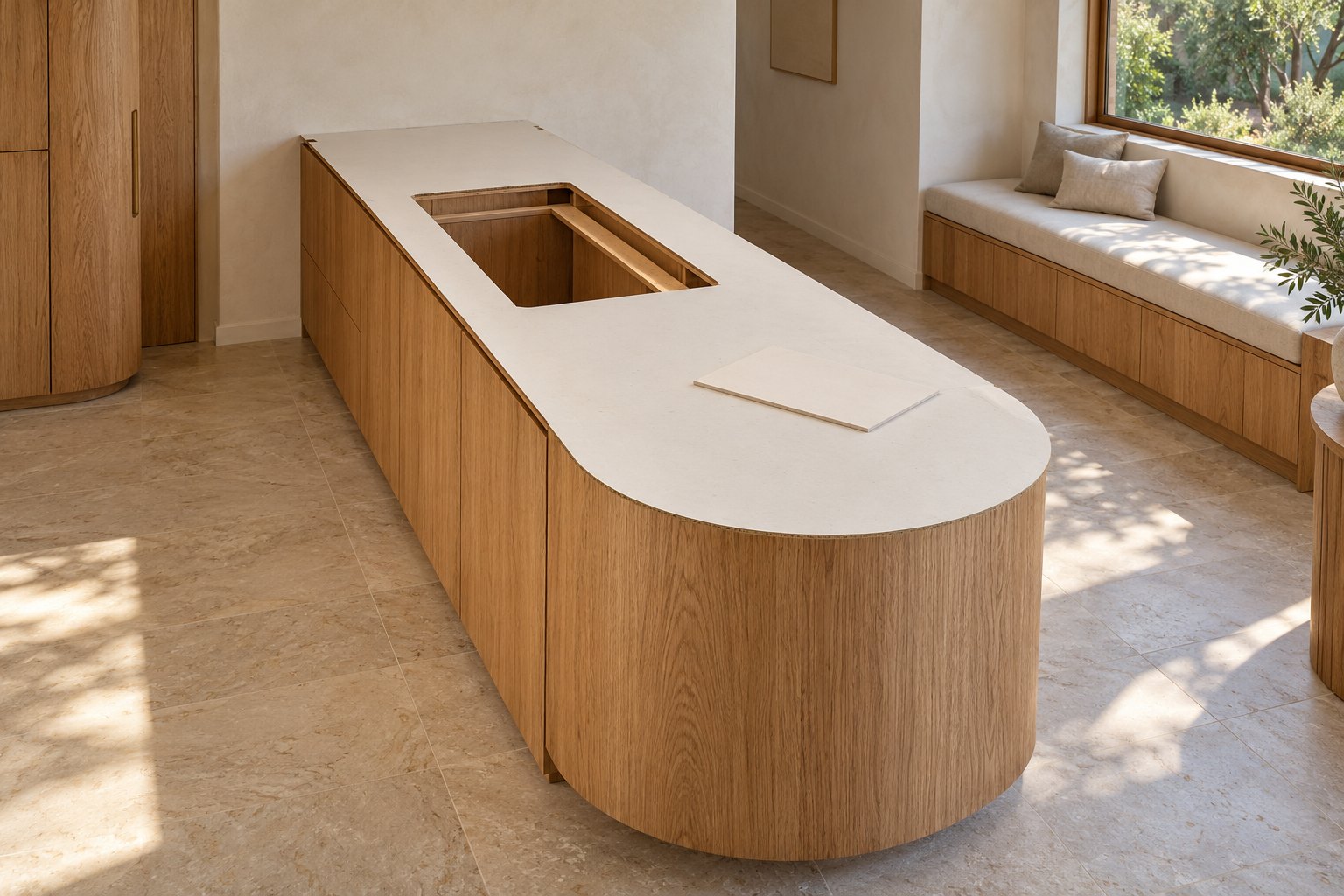
Warm, robust joinery can make collection and folding feel like proper parts of the interior. Keep them out of the main bedroom doorway and give clean storage a different role from used washing. The architecture should support the routine even when a load is unfinished.
Our residential design and feasibility services can compare those whole-home consequences. Bring the route from wardrobe to washing and back again. A worthwhile shortcut should reduce the effort of that complete circuit, not merely make one downward trip disappear.
Start a conversation
Planning a home project?
Tell us the site, project type and the main decision you need help with.
No prepared brief is required.