
A new extension can belong to an older home without making every wall the same colour or finish. In Summer Hill, benssur would first identify the particular character of the existing masonry, then decide how new rooms should meet it. That can prevent a renovation from treating sound original brickwork as something to conceal merely to unify the house.
Inner West Council’s Trafalgar Square character statement, carrying the Draft Comprehensive Inner West DCP 2016 footer, describes varied Victorian, Federation and interwar housing in this defined part of Summer Hill. It distinguishes brick buildings from Victorian buildings with original rendered surfaces and identifies decorative brickwork among the area’s character elements. This is historical character evidence, not a current permission to alter any property.
The distinction matters. An originally rendered wall and an exposed decorative brick facade should not automatically receive the same renovation treatment simply because both are old.
Establish what is original and what is sound
Before selecting a finish, record the walls, openings and later repairs. Appropriate heritage and building-condition advice can help distinguish original work from subsequent coatings or alterations. Check current requirements for the address before deciding what may change. Neither stripping paint nor applying a fresh coating should be assumed harmless to the underlying material.
There may be good reasons to retain a visibly different older wall. It can give the front rooms a clear identity while the rear addition uses a quieter contemporary surface. Where a later patch looks awkward, a carefully resolved junction may be preferable to treating the entire elevation to hide it.
The interior brief should be considered at the same time. A retained wall might be a useful backdrop for dining, a place for a substantial piece of furniture or the edge separating a quiet room from shared living. Its value is not only the appearance of its exterior face. Opening it extensively can improve connection but remove the enclosure that made the original room comfortable.
Choose where the change becomes apparent
At the junction with an extension, compare a direct meeting of old and new with a small setback or connecting space. A recessed junction can keep the original corner readable and provide a deliberate transition inside. It also uses space and creates additional roof and wall junctions that need careful weathering.
A direct connection can be more compact, but requires close attention to alignment and thickness. Matching a new wall’s face while its floor and ceiling sit differently may produce an awkward interior step or ledge. Resolve the section through the connection, not only the external elevation.
Material contrast need not be dramatic. A restrained surface beside detailed brickwork can allow the older wall to remain the more expressive part. Alternatively, compatible new masonry can relate the addition through scale and proportion without pretending to be an exact historical continuation. Samples should be considered together in the property’s light, including the mortar and reveal depths rather than colour alone.
Carry the relationship into the rooms
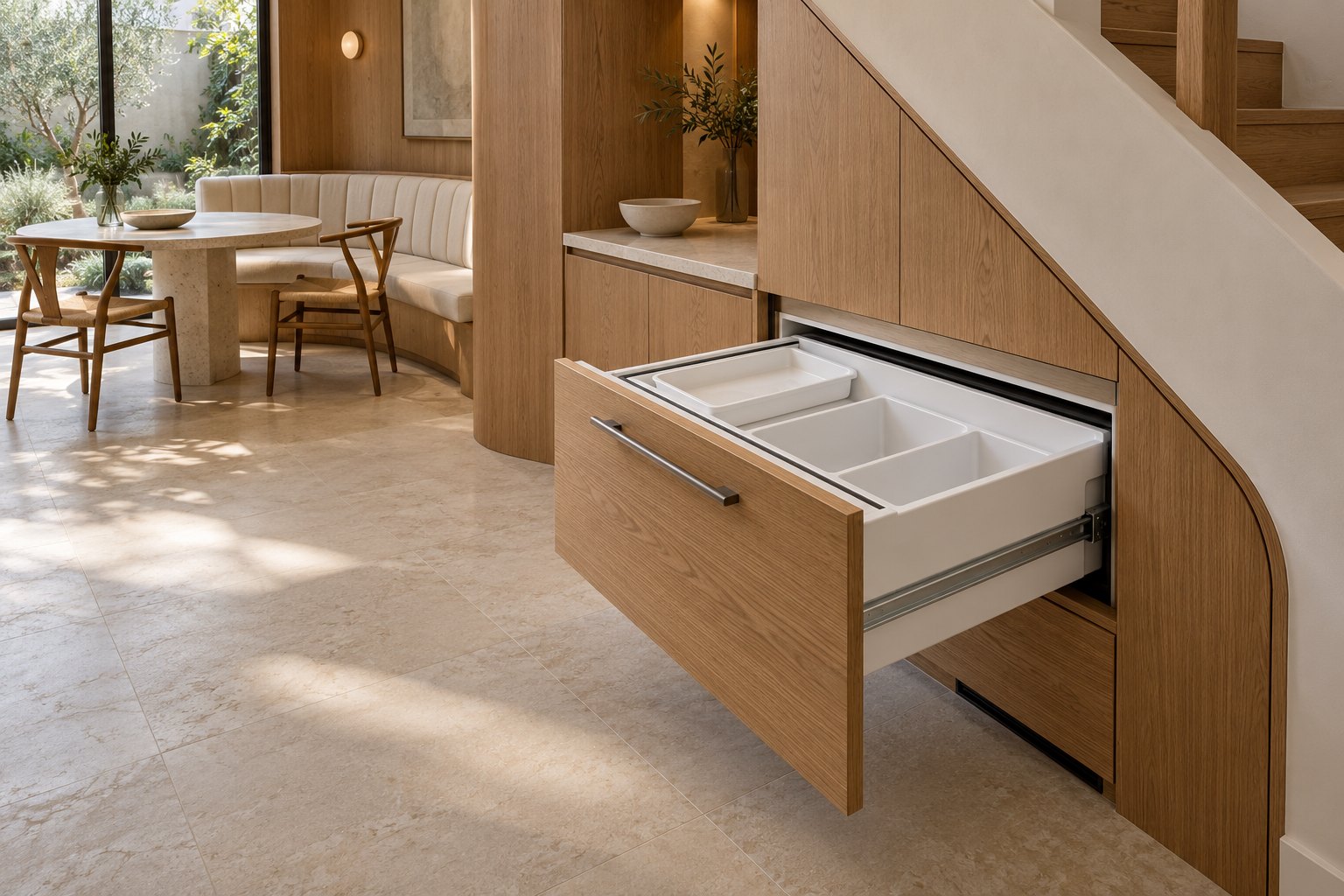
Inside, warm joinery can relate the two parts without requiring every wall to be exposed or every room to repeat the same finish. A cabinet or seat near the transition can give it a practical purpose; it should not conceal unresolved dampness, movement or service routes. Repairs and construction details belong in the scope before decorative decisions are fixed.
For a new home on a suitable site, the local lesson is to respond to the actual neighbouring buildings rather than apply a generic heritage look. Their proportions, wall textures and roof forms can inform restrained contemporary work without copying ornaments. The available development options remain property-specific.
Our residential renovation, extension and new-home services consider retained fabric alongside room planning. For a Summer Hill project, begin with the walls worth keeping and the daily life the new work should improve. Coherence can come from a clear relationship between different parts, rather than making their histories disappear.
Start a conversation
Planning a home project?
Tell us the site, project type and the main decision you need help with.
No prepared brief is required.