
The glass wall of a living room and the structure supporting its roof do not always have to occupy the same line. Moving supports outside the enclosure can change the room’s relationship to the garden, but it also creates a second edge to walk around, look through and maintain. For a Thirroul extension or new home, benssur would draw both edges before treating an external frame as a purely visual feature.
Our residential architecture and interior services consider structure alongside the occupied plan. In a renovation, that includes asking whether the existing house needs this degree of change or whether a more contained intervention would meet the brief.
TAKT Studio’s Exoskeleton House in Thirroul, dated 2018, demonstrates the idea in a particular setting. The practice describes a north-facing living addition beside a retained 1950s brick bungalow, with an external steel frame lifting the roof to admit northern sun. Its arrangement belongs to that project; the architectural opportunity for another home depends on the site, orientation and engineering.
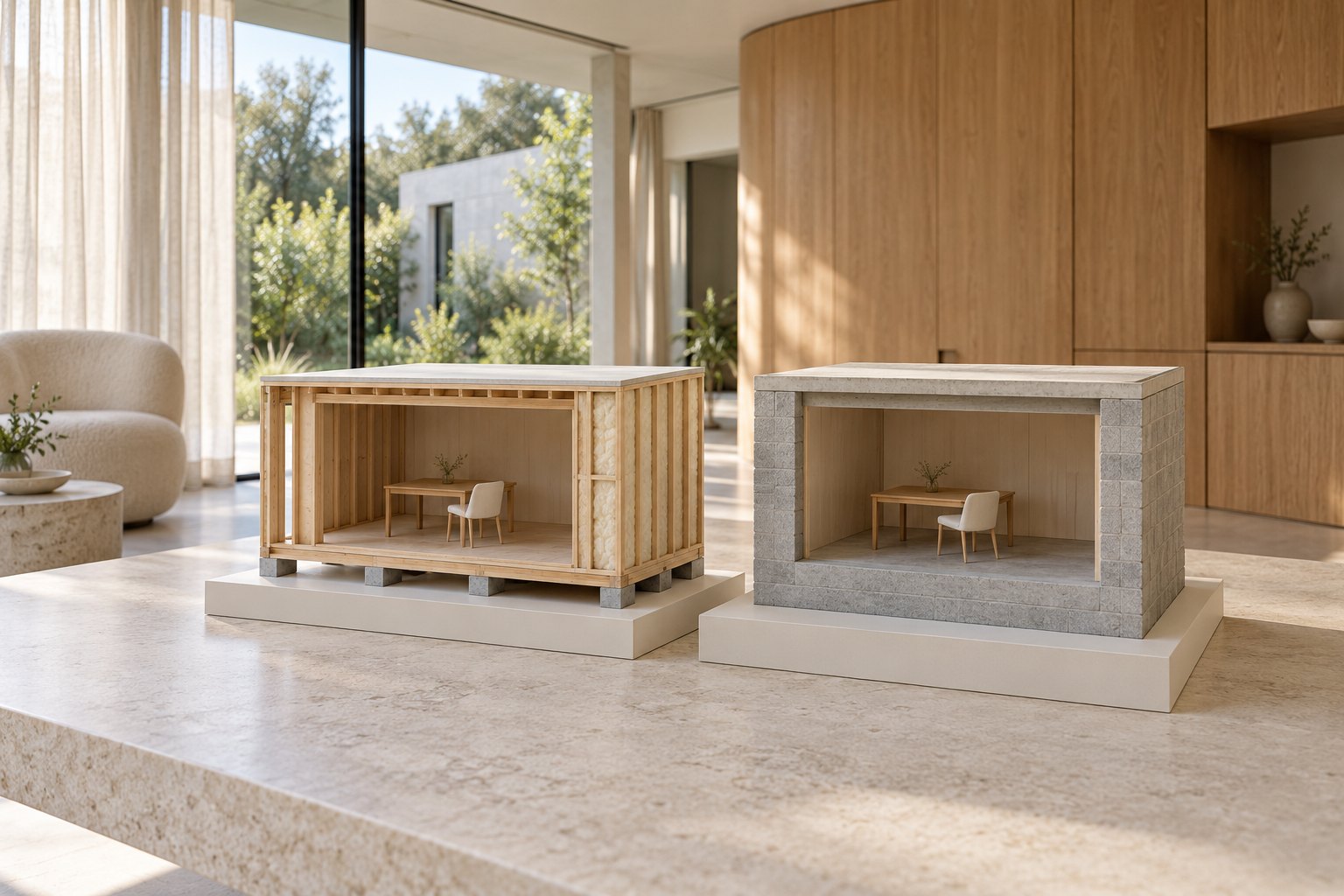
Make the space between the edges useful
A structure outside the glazed wall may allow the enclosure and its doors to be arranged differently from the main supports. That freedom is valuable only if the resulting strip outside has a purpose. It could be a sheltered route, a place for planting or simply enough separation to care for the building. A gap too narrow to use and too awkward to reach is not a generous indoor-outdoor connection.
Start with the most frequent journey from kitchen or dining to the garden. Draw the door open and the external supports in place. A broad doorway is less useful if someone steps directly towards a column and has to turn around it while carrying food. Moving the doorway might clear that route but put it beside the sofa; changing the frame spacing may have structural consequences. Resolve the two arrangements together rather than choosing the glazing after the frame is fixed.
The space outside need not become another continuous dining terrace. A short, direct route to a more open garden place may suit the household better, leaving the framed edge for quieter planting and a view from indoors. Conversely, if sitting beneath the roof is important, allow genuine room for chairs and movement rather than counting the entire strip as usable outdoor area.
Ask what the extra edge does to light and enclosure
The roof and its outside supports can give a glazed room a sense of shelter. They can also obstruct portions of sky and change how far daylight reaches inside. Test the section from the occupied room with the actual orientation, roof depth and surrounding buildings. The Thirroul example’s northern-light strategy is not a performance result that transfers to another site.
A frame close to the glass makes a more compact composition. Moving it farther out may create a more substantial outdoor zone, but increases the territory occupied by the building and can make the garden feel more enclosed. Compare those versions with a conventional arrangement in which the principal supports and enclosing wall coincide. A single edge can be simpler and leave more open ground, even if it offers fewer opportunities to separate the roof from the room.
Exposed structure also remains part of the exterior to be cared for. Ask the project team to resolve protection, drainage, connections and access to relevant surfaces, including how the glazing behind it will be reached. Any structure crossing the enclosure needs coordinated weathering and building-performance design. An elegant visible frame should not rely on inaccessible junctions.
Inside, the room can remain calm: warm joinery against a solid wall, comfortable seating and a clear garden door may be enough. There is no need to repeat the external framework in every cabinet. For a Thirroul home, the useful test is whether the second edge creates a better place to live, or simply another line the household must work around.
Start a conversation
Planning a home project?
Tell us the site, project type and the main decision you need help with.
No prepared brief is required.