
Putting books and desks in one room sounds natural. It becomes less straightforward when someone needs the books while another person needs the door closed. For a Figtree renovation, extension or new home, benssur would ask whether the proposed study is a private workplace, a shared reading room or a room expected to be both.
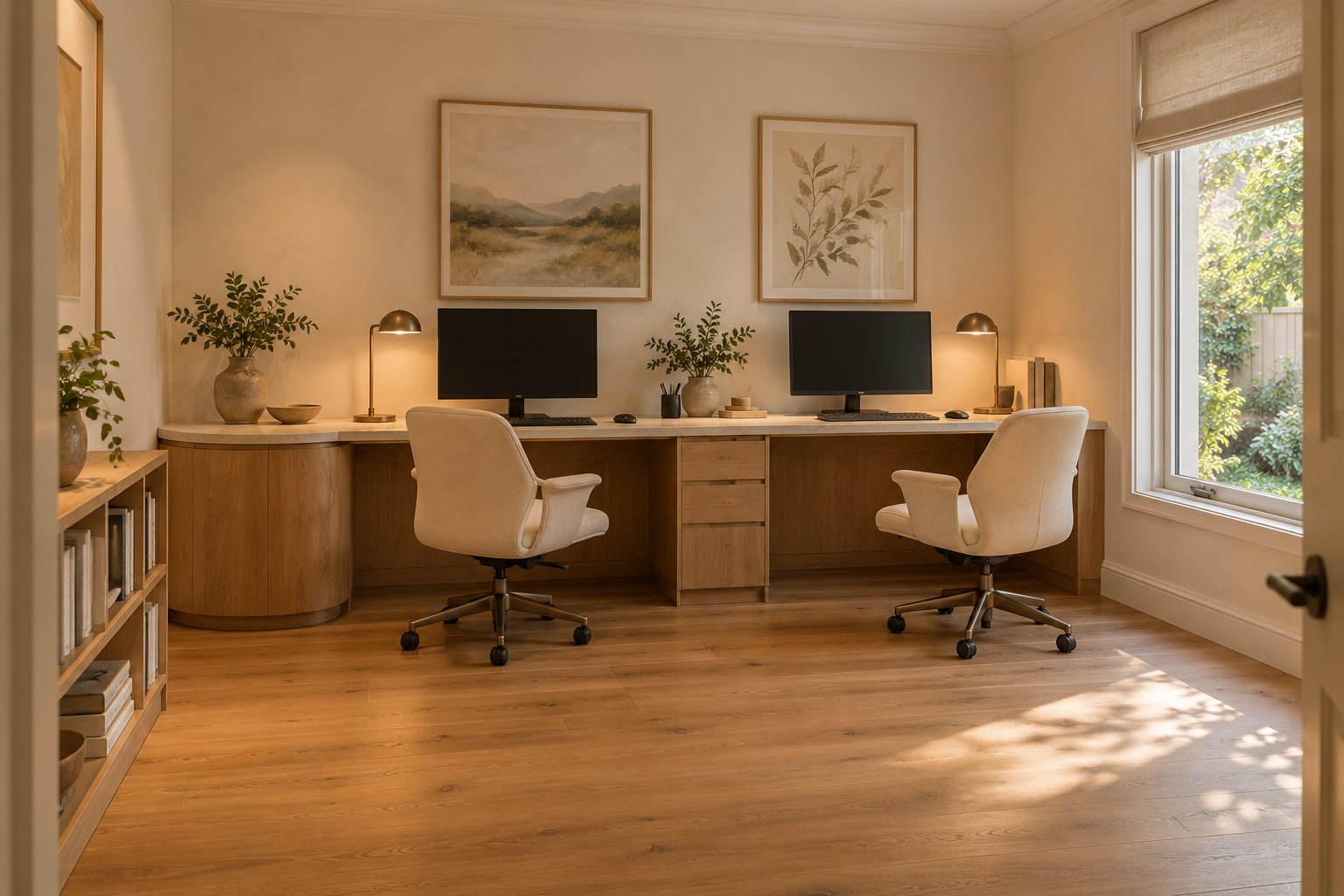
Compass Architecture’s published Family Home, Figtree proposal includes a two-person study/library within alterations to a timber cottage. It also describes a projecting window seat in the compact study. The page mixes existing renovations with proposed work, so this is a design reference, not a verified completed addition. Its combination of work, books and somewhere else to sit raises a useful whole-house question: who is the room available to during the day?
Follow the books, not just the desks
A household library might contain school books, shared reference material and novels used by several people. If all of it sits behind a workroom door, ordinary reading becomes dependent on that room being available. A well-fitted bookcase does not resolve the access problem.
One arrangement keeps work references in the study and shared books outside it. A shallow library wall in an adjoining sitting area can make reading independent of work, at the cost of wall space for other furniture. Placing books along a passage is another possibility, but the person browsing needs room to stop without blocking the route. Shelving should not turn the hall into an aisle that is only comfortable when nobody uses it.
Keeping the collection together may be preferable if the study is deliberately shared. Then its entrance and seating should allow someone to read without passing between the desks or reaching over a worker. The room needs to be planned with that occupation shown, rather than counted as a library because shelves fit above the screens.
We would settle that distinction before deciding whether to enlarge the house. Moving shared storage to an existing sitting room might free enough of the study for a comfortable second activity. An addition becomes more useful when the home truly lacks a place for it, not simply because every book has been assigned to one room.
Keep somewhere to sit that is not a workstation
A window seat can give reading its own position while leaving the centre clearer than a loose armchair might. It is also fixed: its depth, back support, outlook and relationship to the desks must suit actual use. A reader should not have to borrow a worker’s chair or clear work equipment from the cushion each time.
A loose chair offers more choice about orientation and comfort, but needs floor area around it. A projecting bay may create that area while adding external wall, roof and weatherproofing work. Where the existing window already has a pleasant outlook, retaining the wall and reducing joinery could be the more measured intervention. Compare the complete room arrangements before treating a projection as essential.
The study should still belong to the home after work. Warm shelving, a calm view and a clear place to read can give it another life without requiring another room. Conversely, if confidential work regularly excludes everyone else, the shared reading place belongs elsewhere. That is a brief decision rather than a failure of styling.
Our residential architecture and interior services consider room use, storage and new building work together. For your Figtree home, identify which books belong to the household and where people would actually enjoy reading them. That can reveal whether the library needs a study, a seat elsewhere or simply a better connection between existing rooms.
Start a conversation
Planning a home project?
Tell us the site, project type and the main decision you need help with.
No prepared brief is required.